Sunday, 30 September 2018

MAIN BENEFIT OF HOMESTAY


When Maria Sauer from Germany visited Goma, a town in the eastern part of the Democratic Republic of Congo (DRC) early this year to do her final year student project, she contacted Virunga Community Programs which suggested to her that she takes a homestay. Though at first she had qualms about the suggestion, she jumped for it nevertheless and says she doesn’t regret the decision.
“For the eight weeks I stayed at a home in Goma, I was treated like a family and it was all tears for me when the time came for me to live. This home had become a home away from home for me, and I had become emotionally attached to my hosts,” she says.
Sauer says she had opportunity to interact with local people, partake in their rich culture, learn new language and eat plentiful of delicious local food.
“This was an unforgettable experience that I want to relive over and over. It exposed me to new things that I never knew I could experience and I thank the Virunga Community Programs for opening my eyes to experience a whole new world,” she adds.
People like Sauer are among millions of others around the world who have taken travelling to a new level by choosing homestay instead of living isolated in hotels. In the end, they end up making incredible friendships and push their international experience up a level. This can open your eyes to familial ties of the nation. The following are some of the benefits you are going to get with Virunga Community Programs homestay.
Why not ask cultural question?
You may be curious about one thing or another, like direction, the suitable clothing for a specific setting or how to behave in a particular. Homestay is going to provide you the chance to ask your hosts a question while you avoid the embarrassment of asking it in the first place. They are always there to answer your question with a typical smile that is synonymous with African hospitality.
Improve your language learning
Virunga Community Program homestay is going to provide safe learning setting to practice local language and try out new words. You get necessary phrases interacting with your hosts and try this out speaking with happy kids in the comfort of your new home. You are going to bond well through language mishaps.
Live like a local
You will learn what locals do from dawn to dusk. You will also have the opportunity to learn how to cook local food, brew local beer, try out native games or watch local TV shows. Your weekends will be fun taking village walks. You are going to fully live like a local!
You will gain a new family
Finding a home away from home is among the biggest reasons people choose Virunga Community Programs homestay. Living in a family setting may help you feel free and relaxed in a foreign land, and particularly this will help you combat your feelings of homesickness. You are going to be treated like a family, enjoying together locally made traditional food. The hosts normally cook meals for their guests in the traditional ways. This gives you the opportunity to try out different local cuisines and you will also get to learn the complex methods of cooking such delicious meals.

Living with a host family through Virunga Community Programs is going to make you experience the world in a different way. You also will be able to save on your expenses since staying at hotels when studying or volunteering is always quite expensive.
Virunga community has established reputation of linking travellers with host families in the Great Lakes Region of Africa.
You can book with us a homestay by contacting us today through:virungaprograms@gmail.com


Wednesday, 26 September 2018

World Tourism Day should be a day of reflection


On 27th September every year the world come together to celebrate World Tourism Day whose mission is to foster awareness among the international community of the significance of tourism and its social, political, cultural and economic values. Since the official day is set aside in the United Nation’s events calendar, 

this celebration seeks to highlight tourism potential to contribute to Sustainable Development Goals (SDGs,) and address some of the most pressing challenges that face the world today.
For the past few decades, the perception of tourism as an effectual contributor to social and economic development has been propagated. Many see tourism as a buffer against poverty and among the ways to achieve Millennium Development Goals.

Tourism has become among the world’s biggest industries and among the fastest growing in economic sectors. And for several countries, it is seen as the key tool for regional development, since it stimulates new economic opportunities and activities. Tourism might have a positive economic impact on employment, balance of payment, gross income and production. However, it also may have negative effects, specifically concerning the environment.

Unplanned and unfettered tourism growth may result in a deterioration of the environment that tourism growth may be compromised. Being the main source of tourism product, the environment should therefore be jealously protected so that we can have further growth in both tourism and economic development in the future.
Granted, this is particularly true when it comes to tourism based on the natural environment and historical-cultural heritage.

Sustainable tourism has three interlinked aspects: economic, socio-cultural and environmental.  When we talk about sustainability, it implies permanence. Therefore, sustainable tourism includes maximum use of resources, which include biological diversity; minimization of ecological, cultural and social impacts; and maximization of benefits for conservation and local communities.


Also it implies proper management of structures required to achieve this.
The Virunga massif, particularly the eastern part of Democratic Republic of Congo (DRC) has had in the past serious challenges that threaten tourism and conservation. Among them are endless conflicts and poaching. But what’s the solution these myriad of issues?
First we need strong advocacy programs to help people understand the value of tourism and conservation.
Second, there should be international and local support to those noble initiatives that seek to promote tourism and conservation in the Virunga massif.


Third, community involvement is a key ingredient in tourism development and conservation efforts in the region. Therefore, we should find ways to involve the community in local tourism and seek ways through which they can benefit from the industry.

Tourism has capacity to generate both direct and indirect employment. It has a high potential to earn the tourism dollar for the host community. Introduction of new management, infrastructure development and educational experience all have made this industry desirable for everyone
The outcome of increasing tourism has been found to be a critical catalyst in accelerating the rate of socio-economic development.

Therefore, as the world waits to celebrate World Tourism Day in September, We at Virunga Community Programs would like to congratulate all those governments and non-governmental organization that continue to work hard to ensure sustainable tourism becomes a reality. We also support directly the UN’s 2030 for Sustainable Development and Sustainable Development Goals (SDGs).


Monday, 24 September 2018

HAPPY WORLD GORILLA DAY


Today we are celebrating World gorilla Day on this 24th September! Join the celebration


What We’re Doing

To celebrate this momentous day, we commit to invigorating the hearts and minds of global audiences, as DIAN FOSSEY did and, to connect to gorillas, learn more about them, including threats to their existence and well-being, and to take action on their behalf. We hope to share our passion and love for GORILLAS  through our work to expand knowledge of GORILLAS with continuing research in VIRUNGA MASSIFS  build holistic conservation plans and actions for GORILLAS , their habitats, and other species, while developing sustainable livelihood options for community- centered conservation initiatives, and educating and empowering a generation of compassionate, gorilla-loving citizens around the world.

There are so many ways to become a part of the movement to protect Gorillas! To start, learn more about gorillas by visiting our website www.virungaprograms.com  and share your knowledge with your friends and family on Facebook and Twitter using #WorldgorillaDay!
Virunga Community Programs welcomes the move to recognize the gorillas since they are among the endangered species within the Virunga massif.

Know mountain gorillas
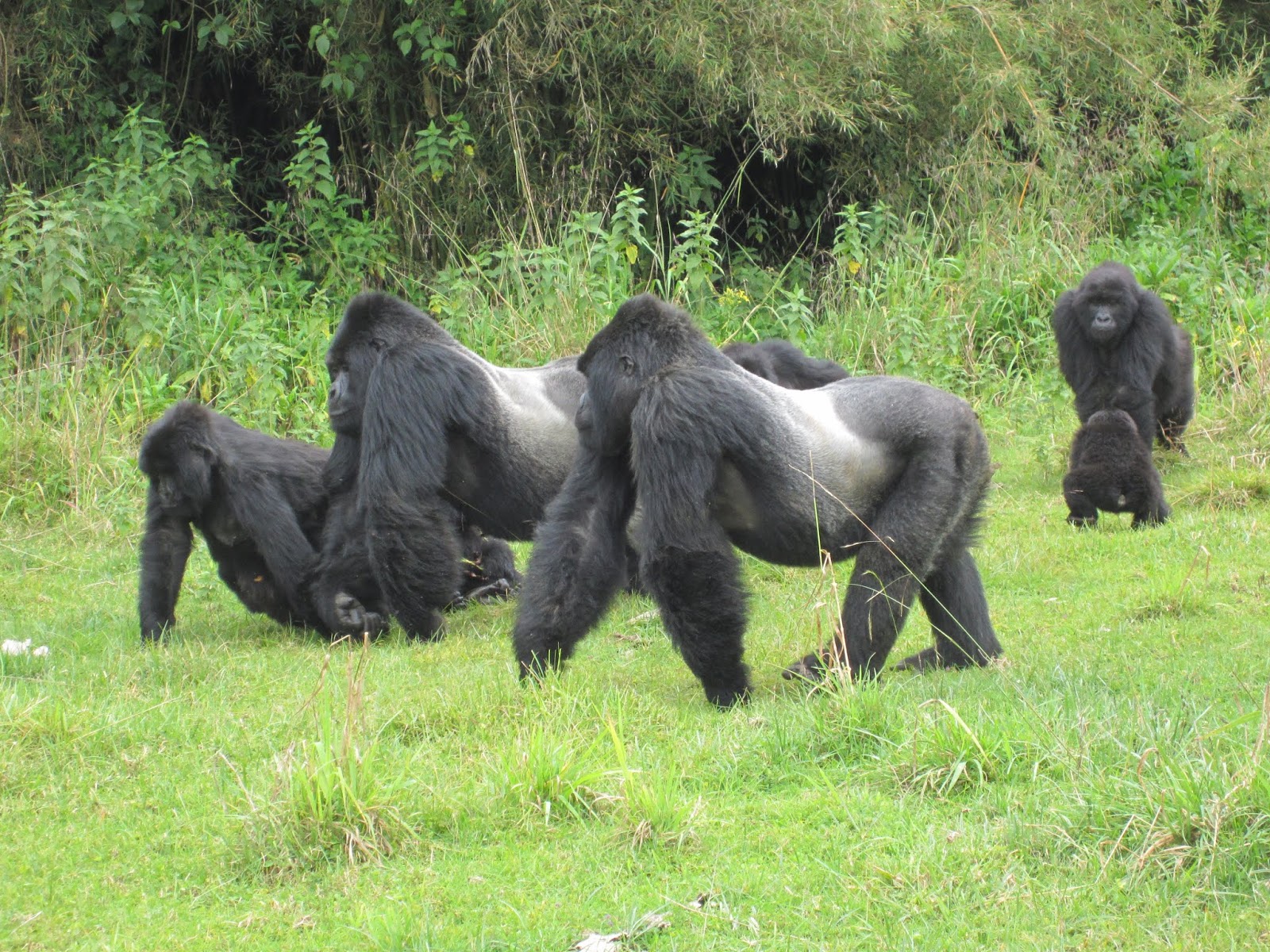
Are social animals that normally form harems, with one silverback male living together with several adult females and their offspring. They roam the forests on their own and sometimes. Mountain gorilla males occasionally form all-male groups, while for the lowland gorillas the silverbacks depart to leave one dominant male in a group. The mountain gorillas have a very funny eating habit. 


They consume over 200 species of plants, and a gorilla eats 15% of its weight. A big silverback, weighing over 200 kilos, will eat 30 kilos of plant where 17 liters of water remains in its body. They rarely drink water because of this phenomenon. The critically endangered herbivores lead peaceful social life in their habitat, and rarely attack humans. You can make a visit to these amazing creatures via Virunga Community Programs and see nature developing at its best


Monday, 10 September 2018

HOMESTAY EXCHANGE PROGRAMS


Virunga Family exchange creates opportunities that help bring people together and promote the development of understanding and common respect between people, communities and nations by promoting the exchange of ideas and experiences. We help give students, teachers, and young professionals from across the world valuable skills that make them to be active and responsible citizens.


People looking for an educational, fun, enriching and cultural exchange adventure will consider joining the friendly people who enjoy working as area representatives of World heritage international exchange program. While on the exchange program, visitors will benefit from a host of unique life experiences which they might not have had in their native countries, like experiencing new culture, learning new languages, meeting new friends and creating long distance relationships.
Book now for more experience
Contact us Through our email at virungaprograms@gmail.com

Friday, 7 September 2018

How Goma youth is helping conservation through use of biodegradable paper bags


By Virunga programs

The Virunga massif is known as a tourism hub in the wider east and central Africa region. This is where you are going to see the famous mountain gorillas and other plant and wildlife species. However, a youth in Goma, DRC is making a difference in the Goma town by making paper bags from waste papers to plant trees and vegetables.
PARUKU LUKUSA  says the idea to make paper bags for tree planting trees was born when he was in primary school in Tyazo primary school in Goma. He says he saw how papers were being burned, contributing to environmental pollution. It was then that he says he started making papers to plant trees and from that he never looked back.
He says after finishing high school, he decided to start a nursery project and began collecting waste papers from different organizations and institutions in Goma town.
PALUKU  says collecting the papers from these organisations to use them to plant trees has made a difference on how some of these organisations and institutions treat waste papers since instead of burning them; they are now resourcefully turning them into another aspect of environmental conservation.

“We visit different organisations and institutions and convince them to give us the papers that we use in the nursery. Most of the people are always excited about the project since they see this as one ways to conserve the environment through planting of the trees,” says PALUKU.
He adds that he approached the Virunga Community Programs, a nonprofit organization based in Goma and told them about the idea and the organization has also helped him facilitate him on the project.
He adds that the biodegradable bags have superiority over polythene ones since they also help in easing seedlings transition from nursery to farms.
According to an article appearing the journal Small-scale forestryupon transplanting, tree seedlings grown in biodegradable bags established with more vigour. The authors note, however, that the adoption of biodegradable seedling bags is not a straightforward proposition for small-scale tree nursery operators in many African countries.
PALUKU  confirms that apart from helping conserve environment, he has made a fortune from planting trees and vegetable since he always has ready market in Goma town where his vegetables are always in great demand.
He says that plastic bags are around everywhere in Goma streets which is quite an eyesore and hopes that the use of alternative biodegradable paper bags can help reduce environmental pollution, now that many African countries are banning the use of plastic bags.
PALUKU says the Virunga Community Program has employed 10 youths and women in the project who not only help in collection of the papers from institutions and organizations but also help him to plant the trees and vegetables and sell them.
“But most importantly, the project not only helps in environmental protection but also help many families around the parks that are now able to feed their families and pay for their school fees and health insurance,” says PALUKU.
He adds that some of the youth they have employed were poachers but now that they have something to do, they have stopped their excursions to the forests and protected areas. This, he adds, has also helped the Virunga Community Programs in general promote its conservation programs.

He, however, says the nascent project is facing some few challenges like transporting the papers to the project site, and also convincing some organizations to donate them the papers since some of them think they are using the papers for profit purposes.
MUYIHEMERA KASEREKA BAY, a member of Virunga Community Programs says the project has contributed to enlightening many families in Goma about gardening and nutrition.
“We facilitate the youth and women in Goma to establish green gardens in their homes. We have also trained them about modern farming methods and they are now able to grow abundant vegetables in their small farms,” says KASEREKA .


Tuesday, 4 September 2018

Goma youth join drive to discourage use of plastic bags


Plastic bags in Africa can be a thing of the past in the next few years. Many countries like Rwanda, Kenya and Uganda have made it crystal clear that plastic bags, known for choking the earth, should ultimately be banned in favour of eco-friendly bags.
In Goma, Democratic Republic of Congo (DRC), a group of 10 youths and women has started a project called Community Programme Congo to make bags out of papers with the primary aim of helping to create employment and conserve the environment.
The project is an initiative of Virunga Community Programs, a conservation nonprofit with headquarters in Goma that helps promote conservation initiatives in the broader Virunga massif.
According to Dunia Deogratias Bitwayiki, the administrator in charge of the project, they initiated the project in August 2018 after realising that plastic bags are at the forefront of blocking drainage systems and they also contribute to an unsightly image of the town by collecting in heaps by the roadside.
He says the project also comes at a time when the DRC government is toying with the idea of entirely banning the use of plastic bags, following similar efforts by some East African countries.
“Congolese officials have announced their intent to ban the use of plastic bags to curb environmental damage, and we saw this as an opportunity to launch a paper bag making project,” says Bitwayiki.
He adds that before they officially started the project, they did feasibility studies in Goma and market research around kiosks, retail shops and hotels and found that there were a need and potential market for the product.
“We discovered that most of the businesses in Goma town were environmentally-conscious and were seeking alternative solutions to the use of plastic bags that were contributing to the acute environmental damage. This gave us the encouragement and impetus we needed to launch our paper bag making project,” he says.
Bitwayiki adds that even though they lacked the capital to launch the project in an industrial scale, they used their own resourcefulness and innovativeness and hoped that as they grow, they will get machines to mass-produce the paper bags.
He says that right now they are manually producing the paper bags using their own hands, which is a significant challenge to them considering that the market for their paper bags is increasing by the day.
He adds that with the DRC intending to ban the use of plastic bags in a bid to promote environmental conservation and deal with severe waste management problems, the market for their paper bags will extend beyond Goma and they are trying to find ways to deal with this.
“Apart from lack of machines to make the bags, another major challenge is the lack of money for our daily operational programs. This is a project that’s in its nascent stage, and we need all the help we can to push it forward. The project has been born and what we need now is for it to grow,” Bitwayiki says.
Bitwayiki adds that the project is now a source of income for ten people who can now afford to take care of themselves.
“Apart from that, “he adds, “we also help in raising awareness about environmental conservation by producing eco-friendly products.”
He says that the paper bag is eco-friendly since it can readily decompose while plastic bags will take too long.
Bitwayiki also says he believes that eventually Congolese are going to opt for the paper bags instead of plastic bags as the government, conservationists and organisations like Virunga Community Programs are stepping up their efforts to promote environmental conservation.
He says that they want to produce enough quantity of bags to keep up with market demand, but they are still hampered by lack of machines and resources to do so, adding that their dream is to have a plant where they can supply the bags not only in the DRC but also in the neighboring countries and beyond.


Thursday, 30 August 2018

Kwita Izina 2018 highlights Rwanda’s mountain gorilla conservation gains


Rwanda Development Board (RDB) has revealed the Kwita Izina activity roadmap for 2018. The theme of these year's event is ‘Conservation is Life’ ceremony is going to take place its tradidional place in Kinigi at the foothill of volcanoes, Northern Province on 7th September 2018.
Kwita Izina, a uniquely Rwandan event, was introduced in 2005 with the aim of creating awareness of conservation efforts for the endangered mountain gorilla. 23 infant mountain gorillas are going to be named during this year's ceremony.
According Virunga Community Programs, this year's event is another proof of significant efforts Rwanda government is doing towards preservation of these endagered species. 
"We also salute all the efforts the Rwanda government is doing, including supporting the local community and extension of the park to preserve these animals," Virunga Community Programs observes.
According to statement from RDB community projects in Kitabi Sector, Nyamagabe District and Ndego Sector, Kayonza District will be launched on 27, July and 5, September respectively. In Kitabi Sector RDB has constructed ten houses for area residents who had formerly lived in the Nyungwe National Park buffer-zone. In Ndego Sector, residents of Karambi and Sangano villages will receive a mobile clinic, solar lighting systems and solar water pumps.
These community projects are part of the RDB Revenue Share Programme. This programme, initiated in 2005 by the Government of Rwanda, aims to guide investment in the areas surrounding the various national parks in Rwanda by ensuring that ten percent of all park revenues.

 Over $USD 1.28 million has been distributed by the Rwanda Development Board to more than 158 community-based projects. These projects have availed clean drinking water, health centers, classrooms and housing to members of the communities living around the three national parks; Akagera National Park, Nyungwe National Park and Volcanoes National Park.
On the 4th and 5th September 2018, the ‘Conversation on Conservation’ (CoC) forum will take place alongside an exhibition focused on conservation trends and practices.
The Conservation Exhibition will bring together tourism and conservation partners from Uganda, Kenya, Tanzania to showcase conservation efforts and avail educational materials to the general public.

The CoC will bring together global conservation leaders, providing a unique platform linking conservation with sustainable tourism by embracing all layers of the value chain.
As a result of conservation efforts such as Kwita Izina, the population of the endangered mountain gorilla has increased to 604 in 2016 in the Virunga Massif compared to 480 in 2010. The Virunga Massif is comprised Mikeno Sector of Virunga National Park in the Democratic Republic of Congo, Volcanoes National Park in Rwanda and Mgahinga Gorilla National Park in Uganda. Mountain gorilla numbers in the entire area had fallen as low as 242 in 1981.
Speaking to the gathered media, the RDB Chief Tourism Officer, Belise Kariza, said;
“The increasing number of mountain gorilla in the Volcanoes National Park is proof of the strides that we have made in gorilla conservation. This could have not happened without the support and collaboration of our conservation partners as well as the cooperation of the members of the community surrounding the park.
Initiatives such as the ‘Kwita Izina’ gorilla naming ceremony, transboundary cooperation and local community education and engagement have all played a major role in conserving gorillas.
Through the contribution of tourism and tourism revenues, we have not only been able to invest in the gorilla experience for our visitors we have also been able increase the amount of support we have given to the local communities through the revenue sharing programme”, she added.
The increase in the mountain gorilla population led the Government of Rwanda to institute a preliminary study on the possibility of expanding the Volcanoes National Park to ensure adequate habitat for the mountain gorilla.  Today the park is 16,027.8 hectares.
 “The plan is a major step in the consolidation of Rwanda’s conservation gains for the benefit of communities today and future generations. Through gorilla conservation and tourism, we are directly benefitting from these wonderful species.  Over the last nine years, revenues from mountain gorilla conservation and the resulting tourism has brought $ USD 107 million to the national coffers”, Kariza noted.


“Earlier this year RDB received a 27-hectare land donation from the African Wildlife Foundation, adding to the 160,000 hectares that had formerly comprised the park. This park expansion will ensure not only the adequate habitat of the endangered mountain gorilla but it will also improve both socio-economic opportunities for more than 18,000 people and the tourism experience in Volcanoes National Park.” Chief Tourism Officer Kariza concluded.

Friday, 10 August 2018

I want to promote Virunga through cycling, says Argentinean Venturini

When Lionel Venturini saw a documentary in Netflix about the Virunga National Park rangers, and the daily problem they face when on duty, he said he had to do something. He had also been reading about Virunga Community Programs and how it’s helping change perceptions in terms of tourism, conservation and community development in the Virunga massif.
Born in 29th June 1984 in Rosario, Argentina, a densely populated city 300km from Buenos Aries, Venturini says he spent most of his childhood in Mar del Plata.
He has worked as a lifeguard since 2016 and in 2017 he says he had the opportunity to further develop his skill as a lifeguard in Madrid, Spain.
Ventirini came back to Mar del Plata after the stint in Madrid and received a diploma as a professional medium deep-river diver. However, he was not to stay in Argentina for so long. “The local social crisis forced me to return to Spain to work as life guard and again this time to work and study and settle down for couple of years,” he says.
He adds that several months before seeing the Virunga documentary he had considered tavelling back to Madrid by motorcycle since travel costs were high. But after seeing the documentary he decided to travel by a bicycle and help promote Virunga National Parks and Virunga Community Programs along the way.
He says he was motivated to do this after watching the documentary and the wide contrast between selfish humans and those of rangers doing their best to protect the Virunga National Park and organizations like the Virunga Community Programs have initiated programs to promote conservation and community development in the Virunga massif.
The Virunga National Park has recently been hit by security problems that forced the authorities to close it for tourism activities till next year.
However, Virunga Community Programs believe it’s selfless actions like the one undertaken by Venturini that will help to expose such problems and the world is going to look for solutions how we can save Virunga in the long run.
“The documentary completely moved me. It even gave the idea to make t-shirts and flyers with the Virunga programs icon in order to promote it to the people I met along the journey and ask for donations as well,” he says.
He says he has invested money and effort because he is absolutely sure it’s worth it. He says he would also ask readers to suggest to him more ideas to collect money for this noble cause.
He says that because he will start working on June 2019, and since he has enough time to travel until the date, he is planning to support both Virunga National Parks and Virunga Community Programs by cycling from Madrid to Salamanca, and back to Madrid on 1 October 2018.
The journey will cover 4000 kilometers and he says it’s going to take approximately five months. Afterwards, he intends to travel by bike towards a euro flight zone route.

“Furthermore I would do the same in Italy in 2019 in France in 2020; in Germany in 2021 and so on .I would like to share the Virunga message around the world and at different school and institutions”. He adds that he hopes the journey will also help him learn English so that he can be able to communicate with everybody.

 “Since first saw the documentary I just visualized myself there taking pictures, meeting the locals and learning about their activities in order to tell what they do  while travelling,” he adds.
He says despite not having enough money at present he would one day wish to visit the parks and this would prepare him better to spread the Virunga message.
“Virunga Community Programs would like to take this opportunity to thank Venturini and we wish him well in his adventure. We hope that his mission that he spontaneously embarked on after seeing what is happening in the Virungas is going to open the eye of the world. We would also wish like-minded people like Venturini to come up and support conservation efforts not only in the Virungas but everywhere there’s a challenge.”

The onus to protect our environment should be a responsibility of everyone, and we believe that we should leave this world a better place we found it. This includes taking conscientious efforts to make it happen. Venturini is doing it. You also can do it, too.